01 / request edgeNarrow clinical APIs
Permission, eligibility, consent, and cadence rules enter through reviewable request boundaries.
Django · Django REST FrameworkClinical systems that had to earn adoption and survive inspection.
A thousand therapy notes a month to audit, and two clinical reviewers reading them one by one. After a two-day prototype sprint with the clinical lead, the AI reads first and clinicians judge what’s flagged; therapists are coached, not punished; the workflow survives the partner going quiet. 72% of eligible clinicians adopted it. Score: “Kdila” by Hope Atina.
At Alma I owned long-running backend systems where privacy, auditability, adoption, and reliability were one requirement. They were the product boundary.
The consequential problem
Reassessments, progress notes, appointment documents, consent, and external audits cross synchronous requests, background jobs, provider workflows, and third-party APIs. A small mistake could become a compliance problem long after the original code path ran.
The challenge was not merely shipping features. It was evolving the system without making clinical operations absorb the risk.
What I saw
Feature flags, decomposed pull requests, explicit job state, and observable failure paths made the work reviewable before it became production pressure. That discipline also made adoption easier: clinicians did not have to become debuggers.
The decision that changed the system
Django and DRF handled clear request surfaces. Celery owned backfills, reminders, PDF generation, and vendor interactions. PostgreSQL and S3 carried durable state. Datadog made the failure path visible enough to intervene before operators felt it.
Eligibility, cadence, consent, and prior state enter together.
Long-running work moves into explicit background stages.
Flags, permissions, and external audit state gate rollout.
The result is traceable, observable, and safe to reverse.
System anatomy / rationale / surfaces
The architecture optimized for operational clarity: keep provider-facing requests narrow, move long-running work into observable jobs, preserve the clinical state transition, and make rollout reversible.
Documents, reminders, backfills, and vendor calls can outlive a provider-facing request or fail on another company's timeline.
Keep the clinical API narrow and move long-running work into durable, observable background stages.
The provider-facing path stays responsive while retry and failure state remain visible to engineering.
Permission, eligibility, consent, and cadence rules enter through reviewable request boundaries.
Django · Django REST FrameworkBackfills, reminders, documents, and vendor interactions leave the synchronous request path.
Celery · RedisWorkflow state remains queryable and attributable across long-running operations.
PostgreSQL · S3Flags, metrics, and failure context make releases reviewable and reversible before clinical operations absorb the risk.
Datadog · feature flagsThe clinical surface remains responsive while failure and retry state stays explicit.
Review, rollout, and rollback remain legible to engineering and operations.
The team can intervene before a clinician has to diagnose the backend.
The system becomes tangible through the places people encounter and use it.
Cadence, eligibility, and prior state coordinate a workflow that unfolds over time.
Provider-authored clinical records preserve permissions and audit context.
Generation, storage, delivery, and retry state remain durable and traceable.
Sensitive boundaries enter early and remain visible through external integrations.
Authentication, data contracts, retry behavior, and audit context are designed for another company's independent timeline.
Python · Django · Django REST Framework
Celery · Redis · PostgreSQL · S3
Datadog · feature flags · vendor APIs · background jobs
Select a tool to see the role it plays in this system.
A mature language ecosystem for production backend systems, clinical business rules, and integration work.
Authentic proof
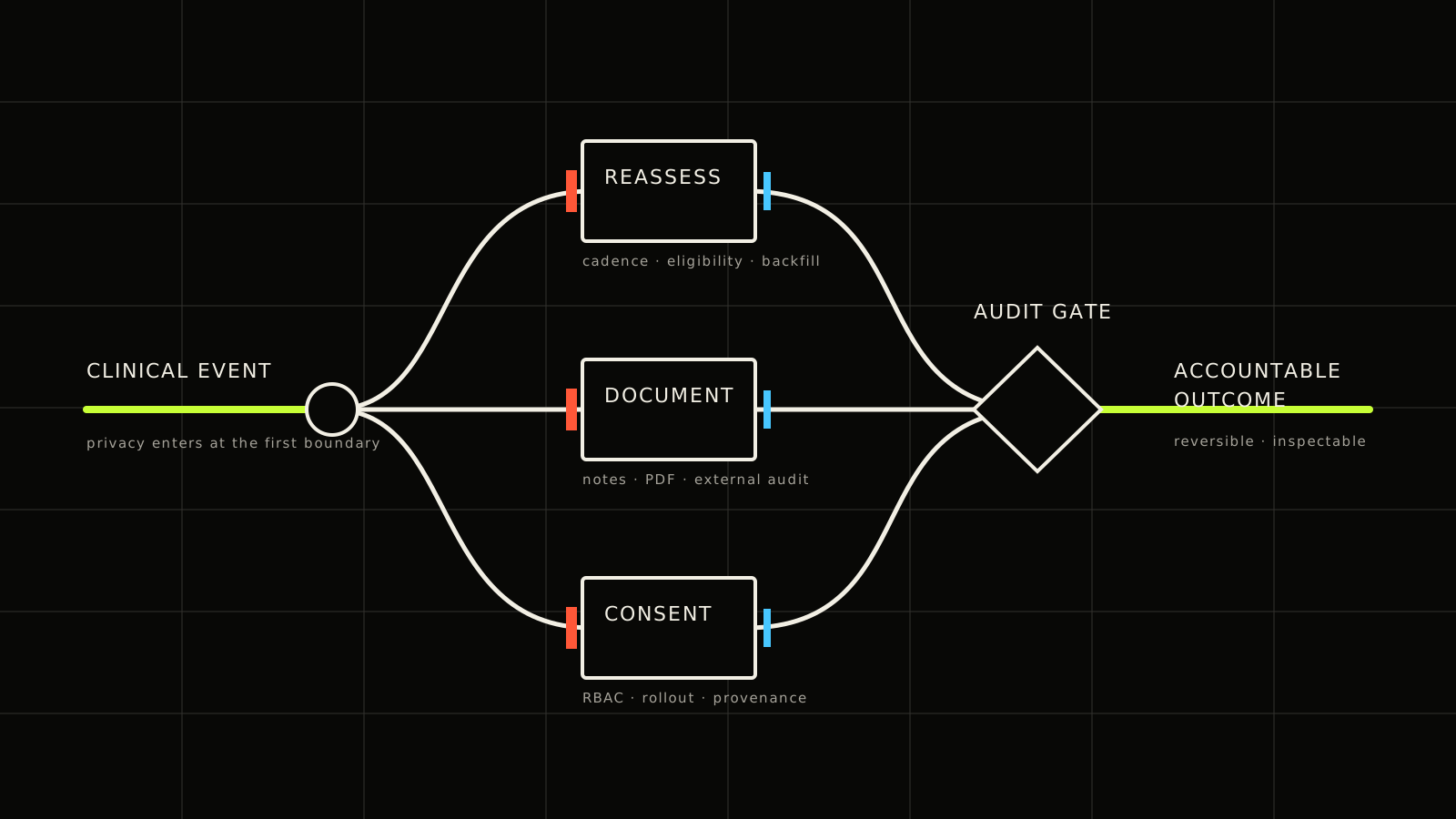
Privacy enters at the first boundary; each branch returns through an explicit audit gate before becoming an accountable outcome.
Reassessments, notes, document workflows, reminders, consent, audit integrations, and observability were treated as one continuity problem.
What changed in my operating model
Alma taught me that care and speed are not opposites. A rollout can move continuously when each step is reviewable, measurable, and reversible. That operating instinct now shapes how I design trust boundaries for agent systems.